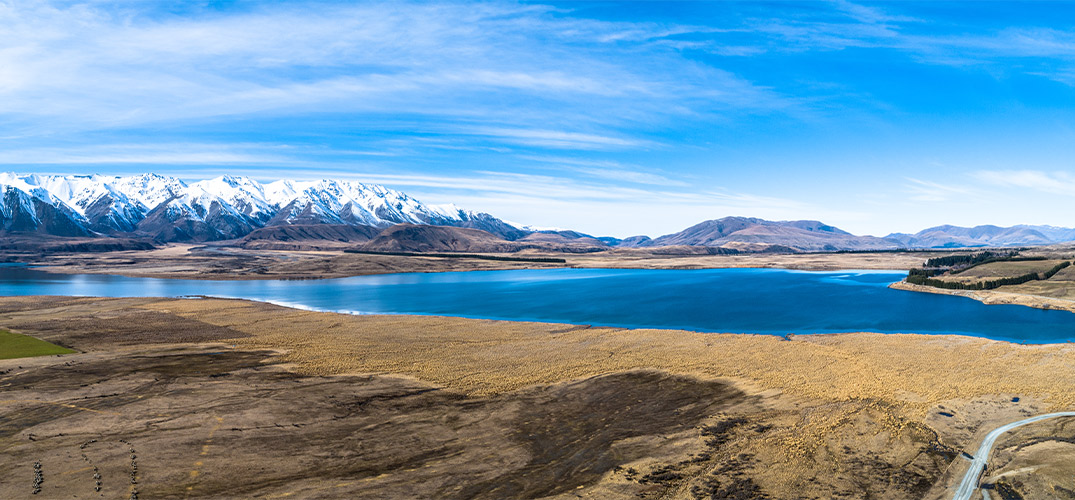
Name of case study
Restoring Ōtuwharekai
Location
Hakatere Ashburton, New Zealand
Year
2007 – Ongoing
Scale
Landscape scale
Area / size
80637 hectares
NbS employed
Wetlands: restoration/preservation
Type of NbS
Ecosystem restoration
Initiator
Department of Conservation
Funder
Department of Conservation
Budget
Not stated
Design group
- Te Rūnanga o Arowhenua
- Environment Canterbury
- Fish and Game New Zealand
- Ashburton District Council
- Forest and Bird
- Rangitat Landcare Group
- Land Information New Zealand
- LEARNZ
- Cawthorn Institute
- Lake Clearwater back owners
- Landowners
- Recreational groups


- Biomass cover loss
- freshwater flooding
- increased pests or spread of weeds
- reduced water quality
- Biodiversity health and conservation
- water security and quality
- Biological control
- creation of a sense of place
- disturbance prevention
- education and knowledge
- habitat provision
- species maintenance
Summary of case study
The Ōtuwharekai restoration project is part of the Arawai Kākāriki wetland restoration program which is restoring five significant wetland sites in Aotearoa New Zealand (Department of Conservation, 2019). The restoration efforts for this specific site are focused on predator control, weed control, monitoring, and improving water quality (Department of Conservation, 2015). Because of this program, the wetland habitat has increased since 2007 by 3 hectares. This has increased the area of restored managed wetland and reduced agricultural land in the area which contributed to water degradation within the wetland area (Department of Conservation 2015).
A large part of the restoration efforts at the Ōtuwharekai site include removal of invasive weed species in order for native plantings to be established within the site better (Department of Conservation, 2019). This will allow better resilience to increased flooding in the area given climate change.
For the success of this restoration project, the Department of Conservation has worked alongside many other organisations as well as volunteers. This has provided an education program but also allowed for more people to get involved with restoring the environment. This has had a large positive social impact. Community volunteers and students have helped with planting efforts (Department of Conservation 2019).
Over 12,000 ha of the upper Rangitata River is now under predator control. Benefitting threatened species such as wrybills, black-fronted terns, and kaki (black stilts) (Department of Conservation, 2018).


References
- Department of Conservation. (2018). Arawai Kārariki 2018 programme update. Available online: https://www.doc.govt.nz/our-work/freshwater-restoration/arawai-kakariki-wetland-restoration/. Date accessed 9 May, 2024.
- Department of Conservation. (2019). Arawai Kārariki 2019 programme update. Available online: https://www.doc.govt.nz/our-work/freshwater-restoration/arawai-kakariki-wetland-restoration/ Date accessed 9 May, 2024.
- Department of Conservation. (2015). Ōtuwharekai – wetland 2015. Available online: https://www.doc.govt.nz/our-work/freshwater-restoration/arawai-kakariki-wetland-restoration/sites/otuwharekai/restoration-otuwharekai/. Date accessed 9 May, 2024.
- Department of Conservation (2024). Restoring Ōtuwharekai. Available online: https://www.doc.govt.nz/our-work/freshwater-restoration/arawai-kakariki-wetland-restoration/sites/otuwharekai/restoration-otuwharekai/. Date accessed 9 May, 2024.