Name of case study
Colo-I-Suva Forest Park
Location
Suva, Fiji
Year
1872, 1952
Scale
Landscape scale
Area / size
92 hectares
NbS employed
Planting for Biodiversity
Type of NbS
Ecosystem restoration; Ecosystem protection
Initiator
Unknown
Funder
The Department of Forestry
Budget
Unknown
Design group
Not applicable

- n/a
- n/a
- n/a
Summary of case study
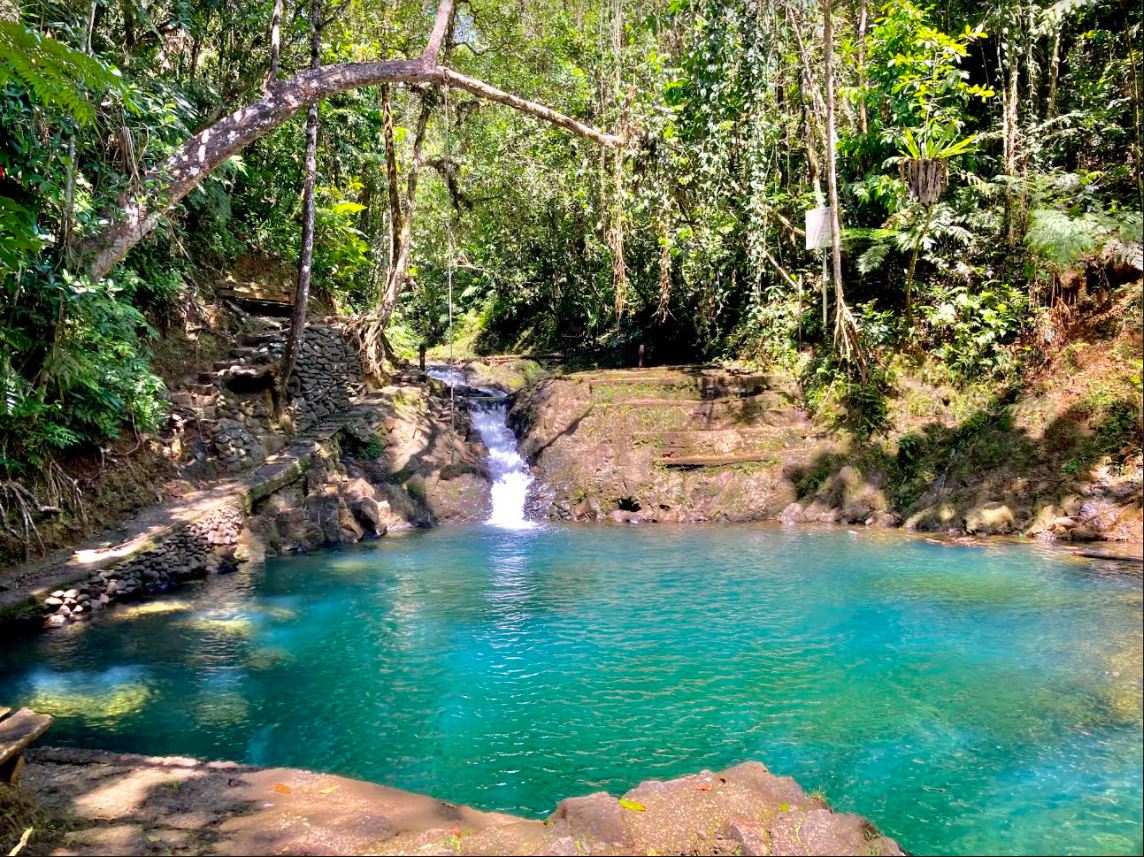
Colo-i-Suva Forest Park in Fiji is a designated sanctuary comprising rich rainforests abundant with native flora and fauna. Originally a pristine tropical lowland rainforest, it was replated in parts in the 1940s and 1950s after aggressive logging, with the strategic planting of mahogany and pine trees to stabilise soil without encroaching upon indigenous vegetation (Pipite, 2022). Situated at altitudes ranging from 120m to 180m, the park hosts sites of archaeological and historical significance, essential ecological systems, and geological phenomena. Offering approximately six and a half kilometres of well-maintained walking trails winding through dense foliage, it leads visitors to natural swimming holes.
Internationally recognised under the Queen’s Commonwealth Canopy, Colo-i-Suva Forest Park underscores Fiji’s commitment, alongside 53 other Commonwealth nations, to safeguard critical forest habitats. The park’s diverse tree species play crucial roles in air and water purification, erosion prevention, and climate change mitigation. Serving as a vital water catchment area, the Waisila Creek flows through the park, sustaining Nausori and Nasinu creeks. Home to an abundance of wildlife, including 14 bird species endemic to Fiji, the park nurtures essential tree species vital for the survival of various fauna, such as the Vadra tree critical for the Fiji Tree Frog’s existence (Pipite, 2022).
The park offers birdwatching and cultural experiences, supported by collaborative efforts between the Ministry of Forests and the local community to promote sustainable tourism. Tourists can witness traditional meke performances and purchase handicraft items, contributing to the community’s economic sustainability and cultural preservation.


References
- Pipite, A. (2022). Estimation of Aboveground Biomass (ABG) Using Allometric Equation: Case Study of Colo-I-Suva Forest Park in Fiji. Preprints, 2022060154. https://doi.org/10.20944/preprints202206.0154.v1