Name of case study
Community compost (bEartha project)
Location
Whakatu Nelson, Aotearoa New Zealand
Year
2019 bEartha v1, 2023 bEartha v2
Scale
suburb/neighbourhood scale
Area / size
9 tonne capacity
NbS employed
Urban composting
Type of NbS
Engineered interventions (not using vegetation)
Initiator
Community Compost Whakatu Nelson
Funder
Ministry for the Environment (MfE), Nelson City Council, alongside crowdfunding campaigns
Budget
NZD$77,000 design and manufacture, NZ$42,000 installation
Design group
Community Compost Whakatu Nelson, Kernohan (Engineers), UpShift (Software development)

- Indirect health social, cultural climate change impacts
- Reduced soil quality
- Biological control (regulation of pests and disease)
- Habitat provision
- Pollination
- Food production
- Habitat provision
- Medicinal resources
- Pollination
Summary of case study
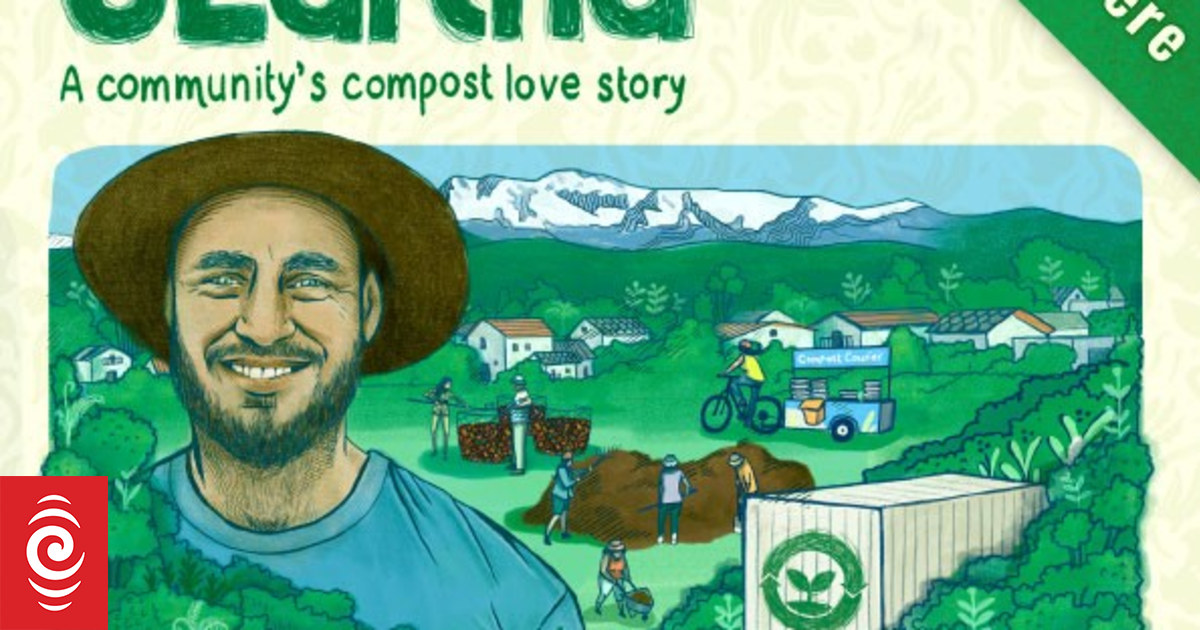
Community compost is a community-based composting social enterprise in Wakatu Nelson, Aotearoa New Zealand (Community Compost, 2024). The overarching project has operated prior to 2019, collecting food waste from households in the area, as well as businesses and processing it using a hot compost process. Initially the project was based in Waimarama Community Gardens, where the food waste was processed using open cage hot composts, and turned by hand to maintain the appropriate conditions to ensure the hot compost process happened correctly. In 2019 Community Compost design and operated an in-vessel hot compost machine ‘bEartha v1 constructed with experts from their community from recycled industrial materials (Next Generation Compost Crafting Machines, n.d.). The machine ultimately suffered several technical and engineering faults and was retired from use.
Subsequently, funded by the central government (New Zealand Ministry for the Environment) alongside local government funding and a crowdfunding campaign, Community Compost designed, constructed, and installed a developed ‘bEartha v2’ (Next Generation Compost Crafting Machines, n.d.). The new machine resolved a number of issues the first design had experienced, and contained the compost vessel within a shipping container making the design scalable and relocatable. The premise of the bEartha machine is an automated hot compost process. After being filled with collected food waste (ground into small pieces), mulch and water, the machine is self-contained in producing compost. Using temperature sensors, the machine monitors the temperature of the material inside a turning vessel, and mechanically turns the mixture to maintain the correct temperature ideal for the desired microbial activity, which is decomposing the material and producing heat in the process. The end product is a semi-finished, highly microbial compost product that can be used as fertility in agriculture after maturing, especially for local home gardens, community gardens, and other organic food projects.
By diverting food waste from landfill, the project prevents this material from producing methane through anaerobic decomposition that occurs in landfill environments – this process is the releasing of carbon contained in material to the atmosphere (De Boni et al., 2022). Instead the carbon is sequestered in the form of compost, a valuable agricultural input (fertiliser) that improves soil health, and therefore plant health.
The community compost project operates with a mainly voluntary team. These kinds of activities promote community action to create tangible change to waste systems, sustainable food systems, food security, and climate outcomes. Additionally, they are ways to create community cohesion through education and support of physical and mental wellbeing. Community Compost Whakatu Nelson are actively looking for opportunities to expand and duplicate the bEartha model of urban composting (Next Generation Compost Crafting Machines, n.d.).
References
- Community Compost. (2024, May 11). Nelson Tasman NZ. https://www.nelsontasman.nz/live-and-study/our-people/case-studies/community-compost/
- De Boni, A., Melucci, F. M., Acciani, C., & Roma, R. (2022). Community composting: A multidisciplinary evaluation of an inclusive, participative, and eco-friendly approach to biowaste management. Cleaner Environmental Systems, 6, 100092. https://doi.org/10.1016/j.cesys.2022.100092
- Next generation compost crafting machines. (n.d.). Community Compost. https://communitycompost.co.nz/innovation