
Name of case study
Great Sea Reef Project
Location
Macuata province Fiji
Year
Since 2005
Scale
urban/landscape scale
Area / size
sea area 1,349km2, land area 2,004km2
NbS employed
Ecosystem based management
Type of NbS
Ecosystem protection
Initiator
WWF South Pacific Programme
Funder
WWF South Pacific Programme
Budget
N/a
Design group
Qoliqoli Cokovata Management Committee, WWF South Pacific Programme, Wildlife Conservation Society , Wetlands International, FLMMA, RARE

- n/a
- n/a
- n/a
Summary of case study
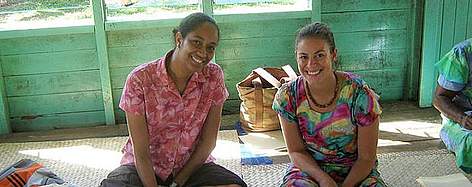
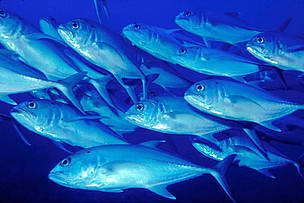
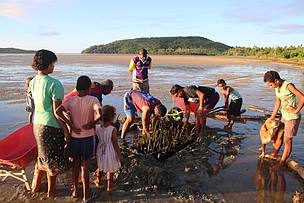
In Macuata province, Fiji, Cakaulevu (the Great Sea Reef) sustains significant biodiversity (The Great Sea Reef, 2021). It is also an integral part of life for the predominantly Indigenous population across 37 villages, and important to local foodways (Clarke & Jupiter, 2010).
Invited by the chief of Macuata province, the WWF South Pacific Programme have lead a project since 2005 promoting sustainable management of both marine and terrestrial resources using ‘ridge to reef’ ecosystem-based management (Clarke & Jupiter, 2010). In 2008 a community-based management planning process resulted in expansion of the protected areas network in the province, based on ecological and socio-economic research.
The resulting ecosystem-based management strategy employs conventional conservation and customary management to create 25 marina and coastal resources and two coastal reserves, covering a range of ecosystem types and functions (such as spawning sites, riparian corridors, mangrove forests, beach systems, and reefs) (Macuata Province Learning Site: MACBIO Introductory Field Visit to the Mali District, 2016). The coastal area of Macuata province, comprising of qoliqoli (customary fishing grounds) contains a network of areas of marine protected areas or tabu (no-take zones, seasonal closures) (The Great Sea Reef: Weaving Communities Together for Conservation, 2017). As field surveys are completed there is anecdotal evidence from local people of positive change, including the return of endangered species to protected areas.
Ecosystem-based management for the people of Macuata Province recognize that the protection of the ecosystem is everyone’s responsibility. For fishermen and farmers alike, ecosystem-based management strategies emphasize the connectivity between people and their natural environment, as well as the connectedness of the whole system (The Great Sea Reef: Weaving Communities Together for Conservation, 2017). The great sea reef for example, does not work alone, but is holistically connected to and intwined with the health of all components of the system, including forests, freshwater, and marine environments.


References
- Clarke, P., & Jupiter, S. (2010). Principles and practice of ecosystem-based management: A guide for conservation practitioners in the tropical western Pacific. Wildlife Conservation Society. https://library.sprep.org/sites/default/files/111_2.pdf
- Macuata Province learning site: MACBIO Introductory field visit to the Mali District. (2016). MACBIO. https://rsis.ramsar.org/RISapp/files/38105685/documents/FJ2331_lit171016.09.2016.pdf
- The Great Sea Reef. (2021). WWF. https://www.wwfpacific.org/what_we_do/freshwater/the_great_sea_reef/The Great Sea Reef: Weaving communities together for conservation. (2017). WWF-Pacific, World Wide Fund For Nature, Suva, Fiji.
Further resources:

<< Ecosystem-based management and ecosystem-based adapatation