Name of case study
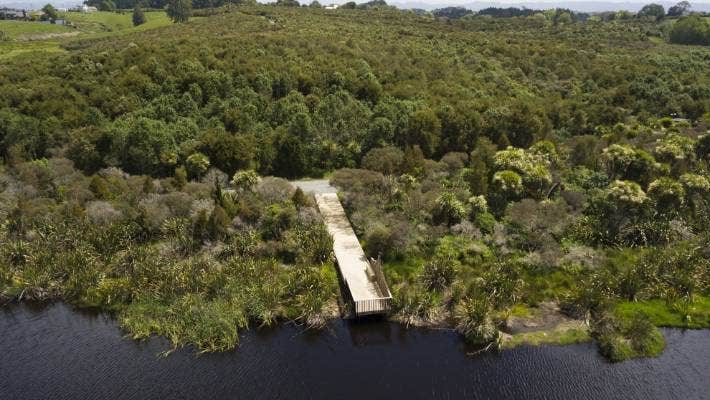
Waiwhakareke Natural Heritage Park
Location
Kirikiriroa Hamilton, Aotearoa New Zealand
Year
2004
Scale
Urban/landscape scale
Area / size
60 hectares
NbS employed
Revegetation / renaturing
Type of NbS
Ecosystem restoration
Initiator
Hamilton City Council
Funder
Hamilton City Council (Operational funding)
Budget
Ongoing
Design group
Hamilton City Council, The University of Waikato, Waikato Institute of Technology, Tui 2000, and Nga Mana Toopu O Kirikiriroa.

- Biomass cover loss
- Changes in rainfall
- Increased pests or spread of weeds
- Increased temperatures
- Reduced air quality
- Reduced soil quality
- Biodiversity health and conservation
- Climate change adaptation
- Biological control
- Climate regulation
- Habitat provision
- Species maintenance


Summary of case study
The creation of the Waiwhakareke Natural Heritage Park was driven by a vision to establish a self-sustaining habitat sanctuary that represents the original ecosystem diversity of the Hamilton basin (Corkill, 2012). Historically, the land, under Pākehā ownership, suffered from agricultural degradation and was predominantly covered by introduced willow trees, contributing to soil quality deterioration (Corkill, 2012). Through revegetation efforts, the park now boasts four distinctive vegetated areas, including kauri-tanekaha-rewarewa-conifer-broadleaved forest, tawa-rimu -broadleaved-podocarp forest, kahikatea-pukatea-semi-swamp forest, and a peat lake margin and swamp wetland, representing the original flora diversity of the region (Duggan, 2012). With almost half of the park now planted, it has already developed into the largest patch of indigenous vegetation in Hamilton City.
This revegetation initiative has yielded social, economic, and ecological benefits, facilitating educational and recreational opportunities within the park (Corkill, 2012). By significantly increasing biomass cover, the park enhances climate change adaptation and biodiversity, while engaging the public in environmental education initiatives like Arbor Day (Corkill, 2012). Furthermore, the park promotes active lifestyles, reducing carbon emissions by integrating bike paths into the broader Hamilton network.
Mitigation efforts are bolstered by land improvement through planting zones and wetland restoration, offering carbon storage capabilities and climate regulation, along with improvements in water, soil, and air quality (Corkill, 2012).
The area holds significance for local iwi, serving as a pathway between Waipa and Waikato rivers and a route to stone resources for Māori, highlighting the cultural importance of reverting the land to its original vegetated state (Corkill, 2012).
While a cost-benefit assessment is pending due to the early stage of the revegetation project, the project promises economic, social, and ecological value. As the areas become self-sustaining, limited maintenance will be required, potentially transforming the park into a lucrative tourist destination (Corkill, 2012).

References
- Corkill, A. (2012). Community recreation and ecosystem reconstruction at Waiwhakareke Natural Heritage Park. Australasian Parks and Leisure, 15(3), 46-47.
- Duggan, I. C. (2012). Urban planning provides potential for lake restoration through catchment re-vegetation. Urban Forestry & Urban Greening, 11(1), 95-99.
- New Zealand Plant Conservation Network. n.d. Waiwhakareke Natural Heritage Park. https://www.nzpcn.org.nz/conservation/restoration/ecological-restoration/case-studies/waiwhakareke/, Accessed 16 May 2024.
Further resources: