Name of case study
Wellington Cable Car Bird Strike Prevention Project
Location
Leonard Cockayne Centre, Kelburn Terminal, Te Whanganui a Tara Wellington, Aotearoa New Zealand
Year
2022
Scale
Building/single site
Area / size
Unknown
NbS employed
Façade shaping and designing for bird safety
Type of NbS
Engineered interventions (not using vegetation)
Initiator
Urban Wildlife Trust; Wellington Cable Car
Funder
Wellington Cable Car; Wellington Zoo Local Conservation Grant
Budget
$NZ30,000
Design group
FeatherFriendly; Sign Squad (installation)

- Biodiversity loss
- Empowerment/equality
- Genetic resources
- Habitat provision
- Species maintenance


Summary of case study
The Wellington Cable Car stands as a prominent landmark in Aotearoa New Zealand’s Capital City. Situated at and near the Wellington Botanic Garden and Zealandia Ecosanctuary, its summit terminal building offers panoramic views.
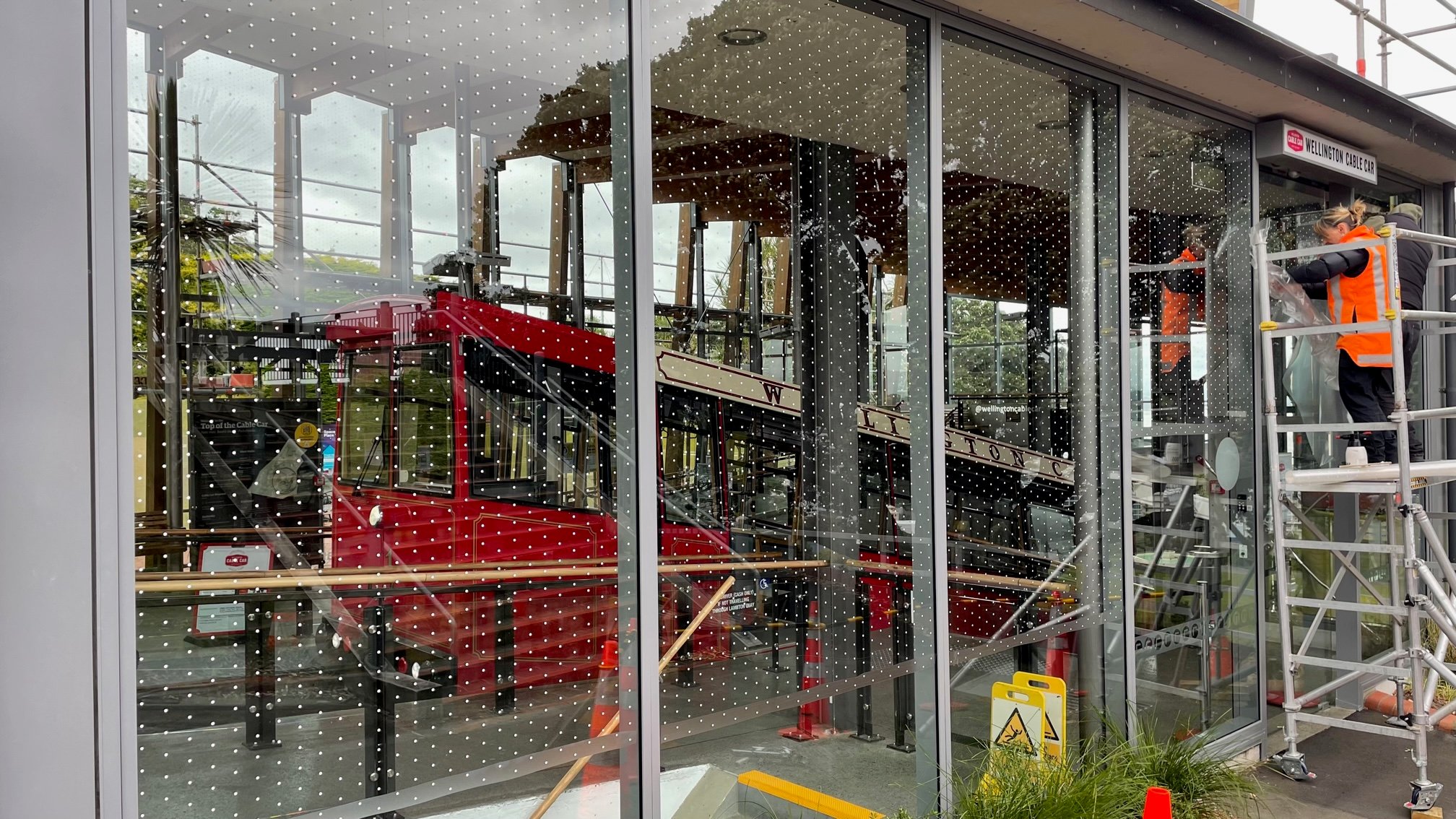
The terminal’s design, featuring expansive glass windows, was intended to provide visitors with an immersive experience of the view. However, this means the building blends into the landscape, making it perilous for passing birds. Native species, including kererū, kakariki, korimako, and ruru, have perished colliding with the windows, with over a hundred documented casualties.
The Urban Wildlife Trust, in collaboration with the Wellington Cable Car drew inspiration from successful initiatives abroad and installed Feather Friendly® Window Markers. By installing these markers, the Cable Car reduced bird-strike fatalities and set a precedent for bird-safe building practices and responsible architecture and environmental stewardship in Aotearoa New Zealand as the first building to deliberately include such bird-safe features.
The initiative champions conservation efforts and fosters a sense of empowerment within the community to address environmental challenges and work towards a more harmonious coexistence between humans and wildlife.